

I was recently asked this question in response to a late-night AMA on Instagram. (Thanks to Studio Esterra for this prompt!) Isn’t this is ultimate chicken-or-egg question? You need clients to build a portfolio, and a portfolio to attract clients… or is there another way? My answer’s gonna be a long one…
(And it may not satisfy you as I won’t be saying things like “networking” or “specialization.” This is purely based on my experience as a first-generation architect and founder.)

1 Define your principles and mission. What does your practice stand for? Never compromise these for projects, money or fame. You will draw people and projects that align with your principles. Even when working on a project at DesignAware, we outline our principles early on. These will guide the project and should be in service of the project priorities, its users, and its future.
2 Create your amazing website. It should not only showcase your best work but also your philosophy, approach, principles and personality. Your website is more important than social media, which isn’t fully in your control. (Check out ours here!)
3 Build your portfolio. (If you build it, they will come.) If you don’t have any commissioned projects, work on hypothetical projects or competitions. It’s not necessary to always show built work, because your role as an architect is to design, not build. Never work on live projects for free, that sets the wrong impression about your practice, and no one involved will value your professional advice. Also don’t barter, it’s almost never worth it. If you happen to get small projects, charge a fair fee and work on them in parallel to portfolio-worthy projects (some projects might be both!).

4 Email list. This is where your followers, admirers and kindred spirits opt in on their own, instead of the other way around. Share updates about your process, your ideas, challenges you’ve faced and overcome, rather than just flashy visuals of completed projects or wins. That way your subscribers (maybe potential clients) know more about you, the mind behind the ideas, and when they have a project in the future, they’re already primed to reach out only to you.
5 Look to other industries for answers. That’s where I learned the importance of an email list, and the difference between your own website and your presence on someone else’s platform (social media). The startup ecosystem, particularly joining the Startup Leadership Program, taught me a lot about being a founder, far beyond just getting projects. I’m also a part of the Architect Marketing Institute, learning from other architects running their firms all over the world.
6 Self-initiate projects instead of waiting for them to happen. Some of our projects have been ones that never existed on anyone’s radar. We envisioned them, proposed ideas, and made them happen.

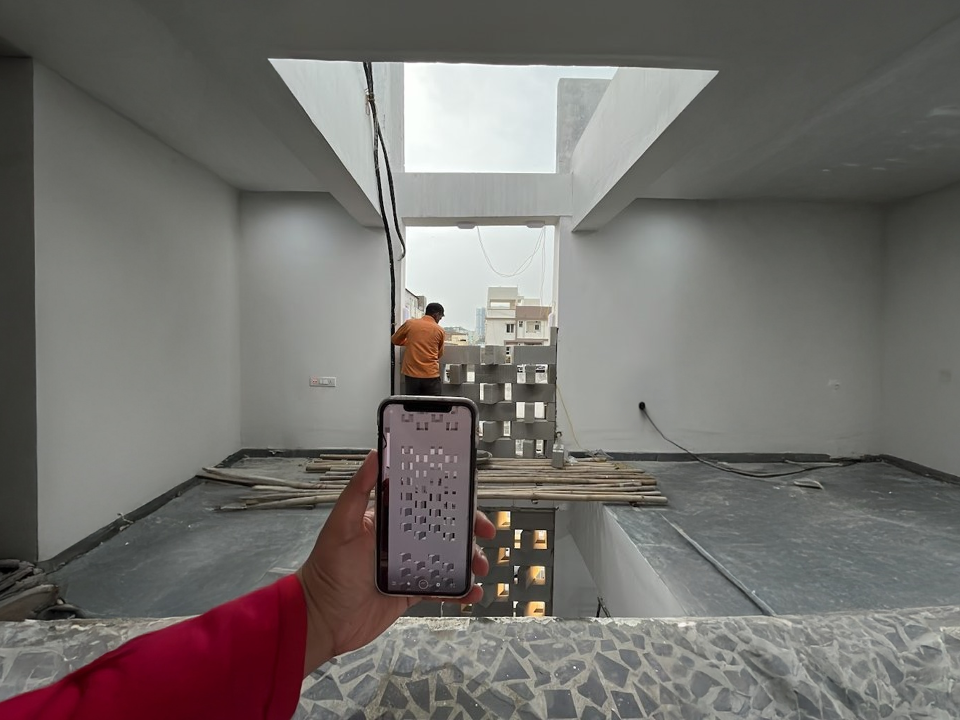
Or: Become a builder! Many of our custom design ideas were deemed too difficult to execute (and some died on the table because of this), so we became builders ourselves. We trained construction workers as well as students of architecture and design on our sites.
If you design something, always learn how to build it.
(Fair warning: this can be super draining and stressful, so make sure you have a good team to support you if you decide to go this way.)

7 Learn to say no. Seems counterintuitive but it will filter out clients that are not a good fit or projects that are not fulfilling to make space for a select few that are. Don’t waste your time with unsuitable clients/projects. It’s lose-lose if you don’t get this.
(Related:
Don’t take unsolicited advice from anyone who isn’t already where you want to be.
One common piece of advice they’ll give you is to work for free in the beginning, or to be flexible, usually with your standards and principles, or to lower your fee. No– since you asked me– increase your fees; you’re probably charging less than the value you bring to the project.)

8 Don’t be fooled by quick wins. Life appears fast-paced (on social media at least), but it’s not. If you’re in this for the long haul, play the long game. Think many years into the future, and work according to your vision and your principles.
Many people I know gave up/gave in after a few too many roadblocks (and I’m not saying it’s wrong, in fact it’s better to pivot to something more fulfilling if you find yourself hating the process of starting up or running a firm), but I continue to love and enjoy the process even after multiple losses, dead-ends, frustrations, and disappointments. Process over product, always.

I can’t say I’ve never come close to giving up. You may find me applying to jobs in another industry on some odd days– that’s how I joined the Museum of Science Fiction, haha– or constantly sharing anti-architecture memes, or self-sabotaging by calling out the COA, but architecture and entrepreneurship seem to be addictions I just can’t shake.

I believe most of our problems are created by being too constricted and narrow-minded, by thinking there’s only one correct answer to any question. We need to expand the definition of what it means to be an architect, and this in turn, will widen the scope and kinds of work we take on, and how we define success.

 Takbir Fatima II